Digital Twins: The Technology That Could Transform How Africa Builds and Maintains Infrastructure
A digital twin is a living virtual replica of a physical system — continuously updated with real-world data, capable of predicting failure before it happens. For a continent facing an infrastructure maintenance crisis, this is not a luxury. It is a necessity.

Africa's infrastructure maintenance crisis
Africa has an infrastructure problem. Not primarily a construction problem — though that is real too — but a maintenance problem. Across the continent, roads deteriorate faster than they are repaired. Power infrastructure fails at rates that would be unacceptable in high-income countries. Bridges age without systematic inspection. Water treatment plants operate at reduced capacity because of component failures that were not anticipated.
The consequences are economic, social, and sometimes fatal. A bridge that fails because its structural deterioration was not detected is not a natural disaster — it is an engineering failure, preventable with the right information at the right time.
Digital twin technology is one of the most powerful tools available for addressing this problem. And it is becoming accessible at a cost and scale that makes deployment in African contexts genuinely viable.
What a digital twin actually is
The term digital twin is used loosely — sometimes to describe any three-dimensional model of a physical asset, sometimes to describe sophisticated real-time simulation systems. The definition that matters for engineering purposes is precise: a digital twin is a virtual replica of a physical system that is continuously synchronised with real-world data from that system, and that can be used to simulate, predict, and optimise the system's behaviour.
The key words are continuously synchronised. A static CAD model of a bridge is not a digital twin. A finite element model of a bridge that is periodically updated with data from embedded sensors measuring strain, vibration, and deflection — and that can predict when and where fatigue cracks are likely to develop — is a digital twin.
The intelligence of a digital twin comes from this continuous data loop. The virtual model is not just a description of what the physical asset looked like when it was built. It is a description of what the asset looks like now, how it is behaving under current loads and conditions, and how it is likely to behave in the future.
Predictive maintenance: from reactive to proactive
The traditional model of infrastructure maintenance is reactive. Something breaks. It gets fixed. In the meantime, the failure has caused disruption, sometimes injury, always cost.
A slightly more sophisticated model is scheduled preventive maintenance — replacing components at fixed intervals regardless of their actual condition. This is better than purely reactive maintenance, but it is inefficient: components that are still serviceable are replaced unnecessarily, while components that are degrading faster than expected are not replaced in time.
Digital twins enable a third model: predictive maintenance. By continuously monitoring the condition of a physical asset and running simulations of its future behaviour, a digital twin can identify specific components that are approaching the end of their service life — and trigger maintenance interventions precisely when they are needed, not before and not after.
The economic case for predictive maintenance is compelling. Studies across multiple industries consistently find that predictive maintenance reduces maintenance costs by 10 to 40 percent and reduces unplanned downtime by 50 percent or more. For infrastructure-intensive sectors — energy, transport, water — these are transformative figures.
The computational foundation
Building a digital twin requires three things: a high-fidelity model of the physical system, a sensor network that continuously feeds real-world data into that model, and computational tools that can process the data and run simulations in near real-time.
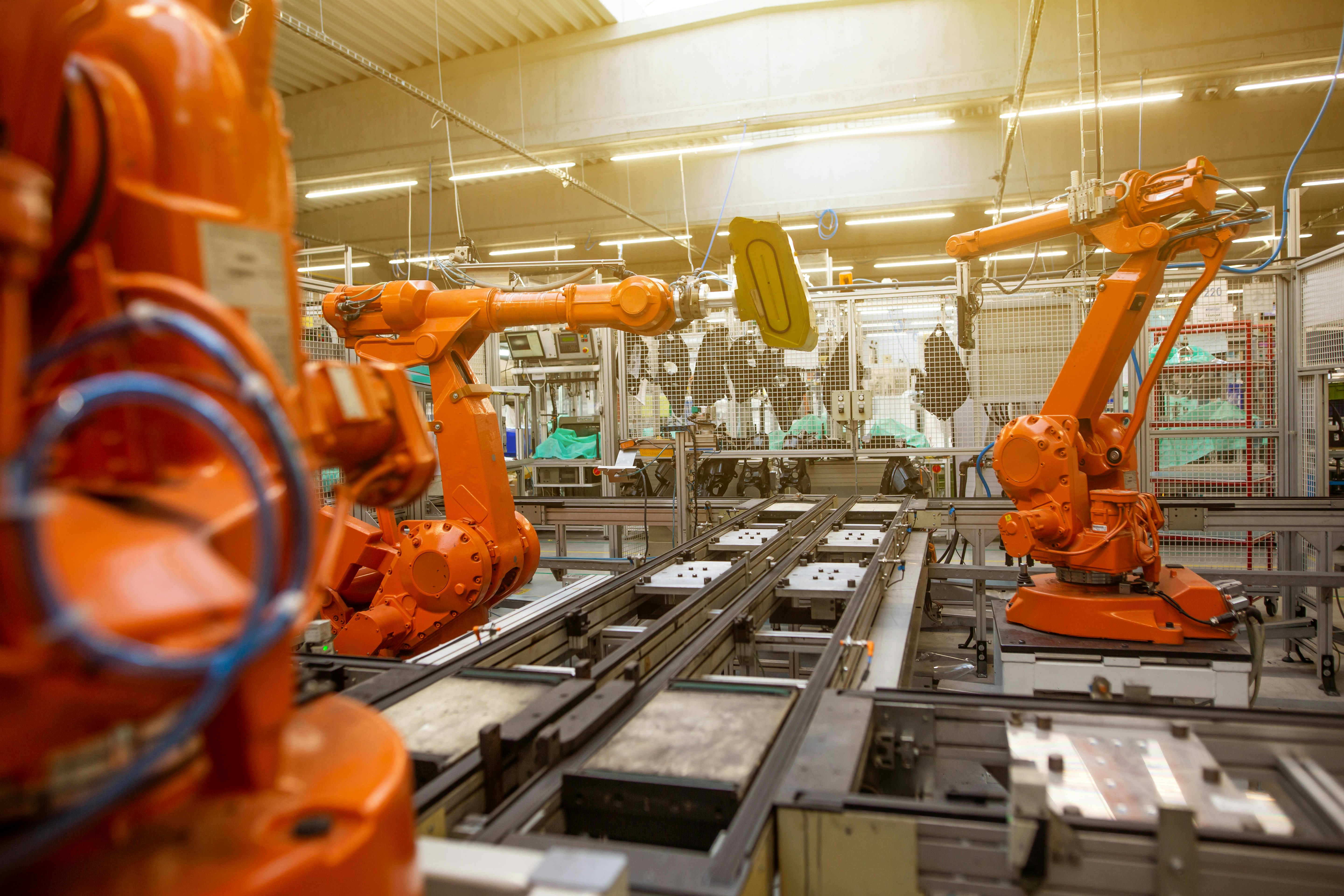
At ORREL, our computational modelling capability — spanning finite element analysis, computational fluid dynamics, multibody dynamics, and systems simulation — provides the foundation for digital twin development across multiple domains. We are applying these capabilities to energy infrastructure, structural systems, and industrial process equipment.
The African opportunity
Africa is not starting from zero in infrastructure development. It is building — and it has the opportunity to build smart. The most cost-effective point to integrate digital twin capability is at the design and construction phase, not as a retrofit to existing infrastructure. New bridges, new power plants, new water treatment facilities can be designed with digital twin infrastructure built in from the outset — sensor networks embedded in the structure, data pipelines configured before the asset enters service.
This is the opportunity that Africa's current infrastructure investment cycle presents. The question is whether the engineers, planners, and policymakers making those investment decisions understand what is possible — and are equipped to demand it.
That is partly a technology question. And partly an education question. At ORREL, we are working on both.
Writing at the intersection of deep technology, engineering, and society. Part of the ORREL team building AI, robotics, and renewable energy solutions from Nigeria.