
Rise of the Machines: Are We Ready for the Age of Intelligent Automation?
Robots are no longer science fiction. They are assembling cars, diagnosing diseases, writing code, and patrolling warehouses. The question is no longer whether machines will transform our world — it is whether we are building that transformation wisely.
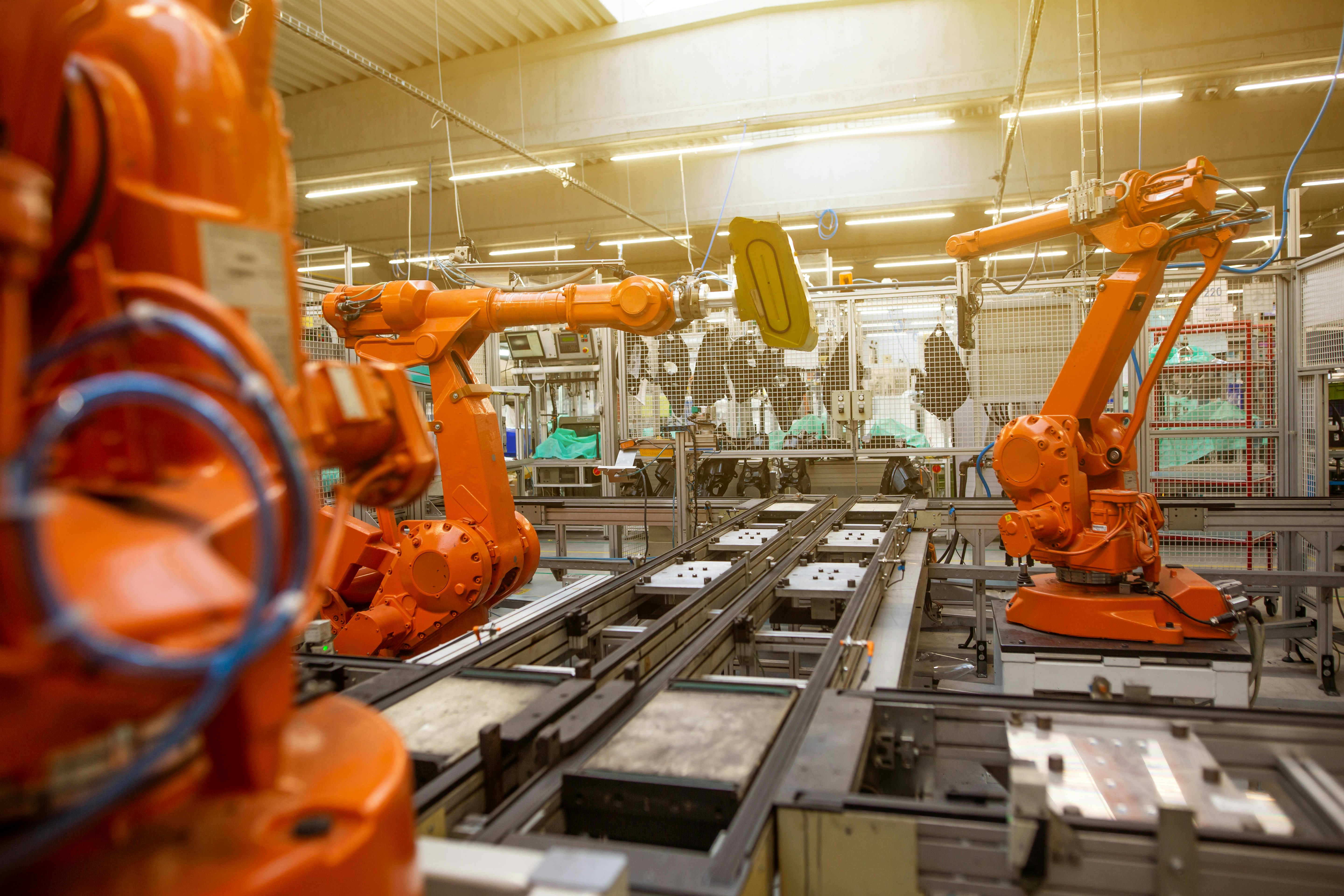
The machines are already here
There is a tendency in public discourse to treat artificial intelligence and robotics as a coming revolution — something on the horizon, approaching but not yet arrived. This framing is mistaken. The machines are already here. They have been here for years. And they are not waiting for us to decide how we feel about them.
Robotic arms weld chassis on automobile production lines with a precision and consistency no human welder can match at scale. Machine learning algorithms approve or deny loan applications in milliseconds. Computer vision systems inspect pharmaceutical products for defects at thousands of units per minute. Autonomous drones survey construction sites, mine operations, and agricultural fields. Language models draft emails, write code, and generate reports.
This is not the future of intelligent automation. This is its present. The question we need to be asking is not whether the machines are coming — it is whether we are building this transformation wisely, equitably, and with clear eyes about what it means for human work, human dignity, and human society.
What is actually driving it
The current wave of automation is not driven by a single technology. It is the convergence of several simultaneously maturing fields.
**Computing power** has followed its relentless curve — GPUs and TPUs now make it economically viable to train neural networks with billions of parameters on datasets of unprecedented scale. **Sensing technology** has improved dramatically: cameras, LiDAR, radar, and force sensors are cheaper, smaller, and more reliable than ever. **Actuator technology** has advanced in both precision and energy efficiency. And above all, **machine learning** has given machines the ability to learn from data rather than requiring engineers to explicitly program every behaviour.
The result is a generation of intelligent systems that can perceive their environment, reason about it, learn from experience, and act in ways that were simply not possible a decade ago.
The two faces of automation
Automation has always had two faces. One is the face of liberation — freeing human beings from dangerous, degrading, or mind-numbing labour. The other is the face of displacement — removing the economic basis of livelihoods that millions of people depend on.
Both faces are real. Both matter. And the uncomfortable truth is that which face dominates depends not on the technology itself, but on the social, economic, and policy choices made by governments, companies, and societies around how the technology is deployed and how its benefits are distributed.
What this means for Africa — and for Nigeria specifically
Africa occupies a particular position in this global transformation. The continent is home to the world's youngest and fastest-growing population. But automation changes the calculus. The labour-intensive manufacturing sectors that powered the economic rises of South Korea, Taiwan, and China are increasingly automated.
Nigeria, with its enormous talent base, its growing technology ecosystem, and its urgent infrastructure challenges, has a particular opportunity and a particular responsibility. The engineers, data scientists, and roboticists being trained today are the ones who will determine whether Nigeria is an active architect of this transformation or a passive recipient of it.
The ethics we cannot avoid
No serious discussion of intelligent automation can sidestep the ethical dimensions. A hiring algorithm that systematically disadvantages certain demographic groups is not a neutral technical artefact. It is a discriminatory system, regardless of whether the discrimination was intended by its designers.
At ORREL, every system we build — whether it is a machine learning model for industrial automation, a recommendation algorithm for solar installer matching, or a robotic platform for field operations — is built with the question of impact at the centre of its design.
Where we go from here
The rise of the machines is not a story with a predetermined ending. It is a story being written, right now, by the choices of engineers, policymakers, business leaders, educators, and citizens. The machines are rising. The question is whether we rise with them.
Writing at the intersection of deep technology, engineering, and society. Part of the ORREL team building AI, robotics, and renewable energy solutions from Nigeria.