Extended Reality Is Rewriting How We Teach Engineering — And Africa Cannot Afford to Miss It
XR is not just a novelty for gaming and entertainment. It is a pedagogical revolution that could give every engineering student in Nigeria access to laboratory experiences that only elite universities can currently provide.
The laboratory access problem
Engineering education has a fundamental constraint that classroom-based subjects do not: it requires physical infrastructure. You cannot learn fluid mechanics without a fluid mechanics laboratory. You cannot develop intuition for structural failure without seeing structures fail. You cannot understand material microstructure without access to a scanning electron microscope.
This constraint creates a profound inequality. Universities in high-income countries invest millions in laboratory infrastructure. Their students develop hands-on intuition through hundreds of hours of experimental work. Universities in lower-income countries — including most Nigerian institutions — cannot match this investment. Their students learn theory without practice, equations without experiments, concepts without consequences.
The result is a skills gap that persists long after graduation, manifesting as reduced engineering confidence, higher error rates, and slower professional development.
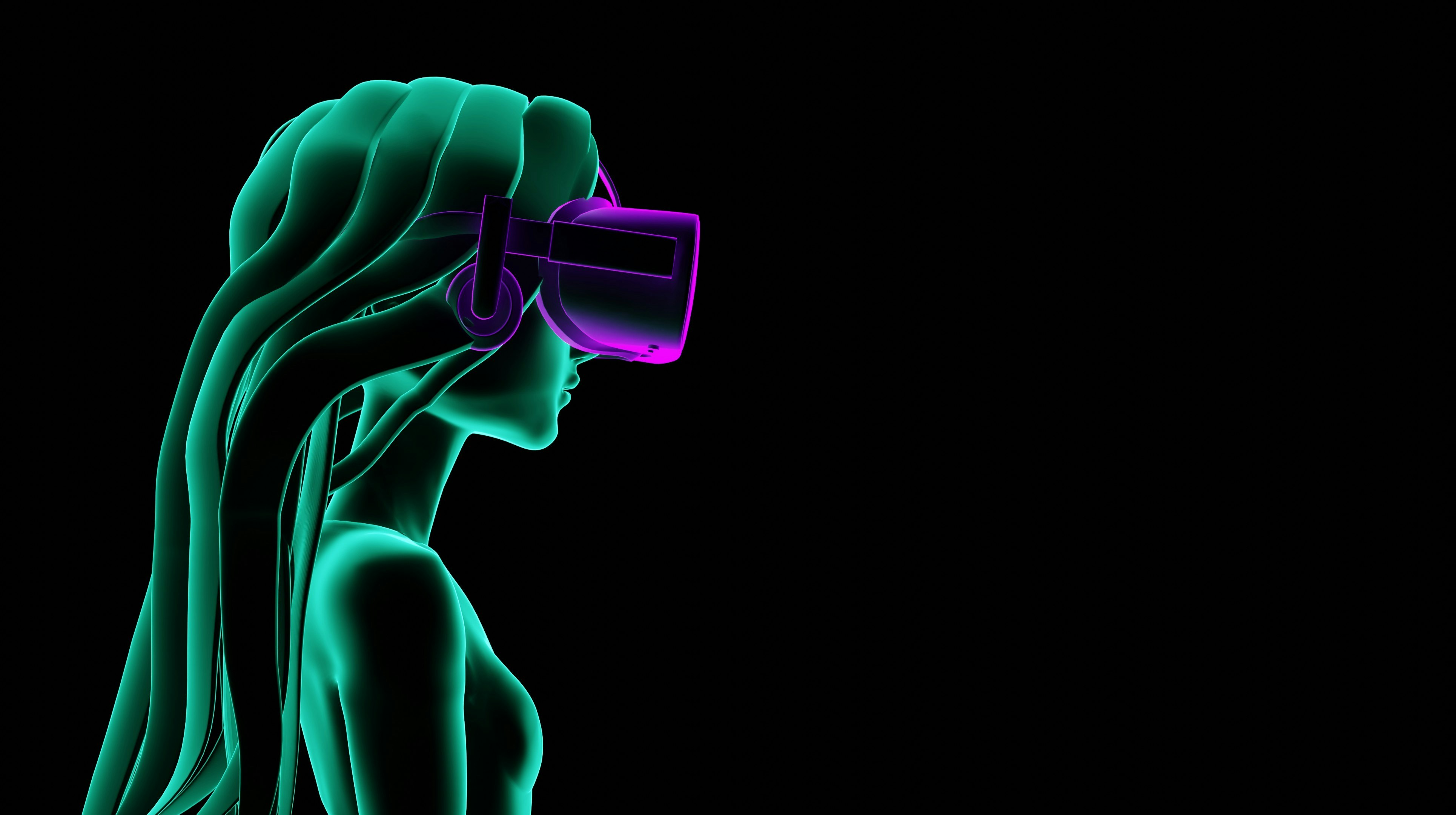
Extended reality — virtual reality, augmented reality, and the spectrum of mixed reality experiences in between — offers a credible path out of this constraint.
What XR actually enables in engineering education
A well-designed XR laboratory simulation is not a video of an experiment. It is an interactive, three-dimensional environment in which a student can manipulate variables, observe consequences, make mistakes, and learn from them — in ways that would be impossible, dangerous, or prohibitively expensive in a physical laboratory.
Consider the possibilities. A structural engineering student can load a virtual bridge to failure and observe exactly where and how it fails — without the cost of physical materials or the safety concerns of a real failure. A chemical engineering student can run a distillation column at operating conditions that would be dangerous in a real plant. A materials science student can zoom into the atomic lattice of a metal alloy and observe how dislocations move under stress.
These are not approximations of the real experience. For many learning objectives, they are superior to the real experience — because they can be paused, rewound, slowed down, and repeated as many times as the student needs.
The gamification dimension
Beyond simulation, XR enables gamification of engineering learning in ways that fundamentally change student engagement. When a student is not just solving equations but navigating a virtual plant where their decisions have visible consequences — where a miscalculated pressure drop causes a pipe to burst, or a poorly designed foundation causes a virtual building to settle unevenly — the motivation to understand the underlying physics is qualitatively different.
At ORREL, our XR practice is specifically focused on this intersection of simulation fidelity and pedagogical design. We are building environments that are not just technically accurate but educationally effective — designed around how engineering students actually learn, not just around what the physics looks like.
The opportunity for Nigeria
Nigeria has over 170 federal and state universities. The majority face serious laboratory infrastructure constraints. The majority of their engineering graduates enter the workforce with theoretical knowledge that outpaces their practical experience.
XR offers a way to close this gap at scale — not by replacing physical laboratories, but by supplementing them dramatically. A single well-designed XR laboratory environment, deployed across dozens of institutions, could give hundreds of thousands of students access to experimental experiences that would otherwise require infrastructure investments running into billions of naira.
This is the opportunity. And it is one that Africa cannot afford to miss.
Writing at the intersection of deep technology, engineering, and society. Part of the ORREL team building AI, robotics, and renewable energy solutions from Nigeria.